Fantasy selection desk · method explainer · Updated 6 August 2026
Reading a Fantasy Cricket Prediction: Roles Before Names
A durable way to weigh a probable XI, captain pick, vice-captain option, pitch note and injury update without confusing a working prediction with a confirmed team sheet.

The standard way most readers approach a fantasy cricket prediction is by name recognition. They scan the probable XI, pick the most famous batter as captain, then look at the pitch and injury lines for a vibe check. That routine produces a confident answer, but it skips the single variable that decides whether a captain pick will actually deliver: role stability.
A role is the pattern of expected involvement a player carries into a match. For a top-order batter it is deliveries faced and powerplay scoring windows. For a wicketkeeper-batter it is the same plus catches and stumpings. For a death bowler it is the back end of an innings. For an all-rounder it is two of those channels stacked together. Role stability is the likelihood that the named role survives contact with the toss, the surface and the captain's actual rotations. A prediction that ignores role stability tells you who might play. A prediction that respects role stability tells you who is most likely to touch the ball often enough to score.
That distinction is the centre of this explainer. Below is a framework for reading any fantasy cricket prediction with the same discipline: probable XI first as a map of roles, then captain and vice-captain as separate role questions, then pitch and injury as conditional modifiers. The dated case used throughout is a published pre-match preview of Mumbai Indians versus Punjab Kings at the Maharashtra Cricket Association Stadium in Pune on 13 April 2022. It is treated as a historical case study, not as a current fixture. The method travels even though the names should not.
Step 1: read the probable XI as a map of roles
A probable XI only becomes useful when each name is paired with the role that name is expected to perform. A list of eleven players does not tell you who opens, who bats at six, who keeps wicket, who bowls at the death, or who fields in the ring during the powerplay. Those are role questions, and they decide fantasy output long before form does. The Pune case preview listed Ishan Kishan, Jonny Bairstow and Jitesh Sharma as wicketkeepers; Suryakumar Yadav, Mayank Agarwal and Rohit Sharma as batters; Kieron Pollard and Liam Livingstone as all-rounders; and Jasprit Bumrah, Rahul Chahar and M Ashwin as bowlers. That grouping is helpful, but it is only the start.
For a real working sheet, write each expected starter next to four labels: opening position, expected overs, wicketkeeping duty, and fielding role. Leave a label blank when the source material does not support an answer. The discipline matters because it stops reputation from filling the gaps. A player who batted at number three in the previous match may drop to five if the opposition brings in a legspinner and the captain prefers a left-right combination. A bowler listed as a new-ball option may be held back to the middle overs if the captain wants to chase a specific matchup.
Why role mapping beats reputation
A famous batter who bats at number six against a quality attack is a different fantasy proposition from a less-heralded name who opens against the same attack. The probable XI tells you both are playing. The role map tells you which one is more likely to face thirty balls in conditions that suit them.
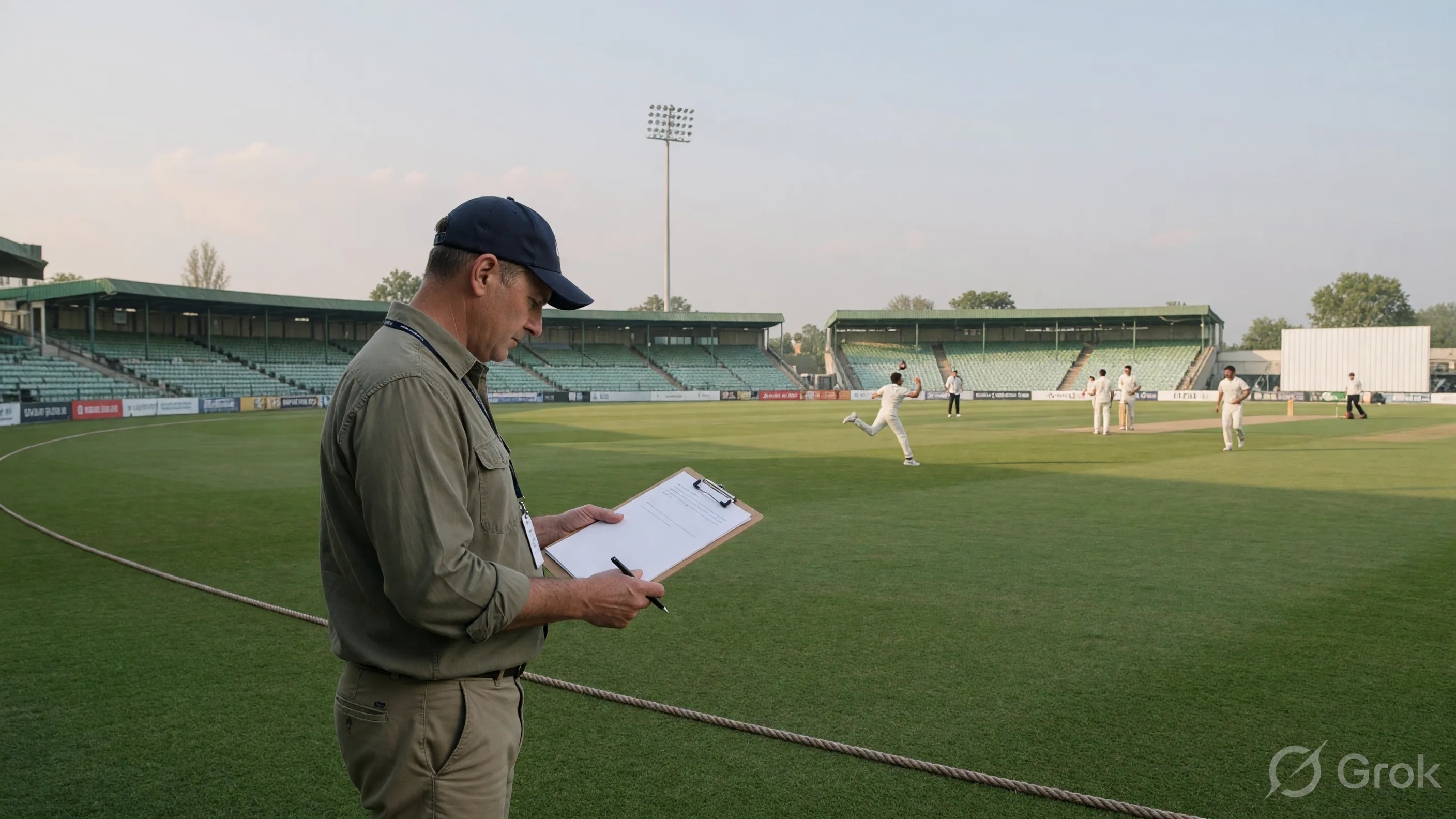
Step 2: separate the captain pick from the vice-captain pick
The captain multiplier makes selection quality disproportionately important, but it does not change the underlying logic. The captain should be the player with the highest expected role volume under the conditions of the match. The vice-captain should protect against the most plausible failure mode of the captain pick. Treating those as two distinct questions prevents the common mistake of picking two similar players and hoping one of them fires.
In the Pune preview, Suryakumar Yadav was the suggested captain and Shikhar Dhawan the suggested vice-captain. The reasoning pattern was that Yadav offered an innings-changing route through the middle order against an attack that was described as a weakness, while Dhawan offered a steadier volume of deliveries at the top of the order. Those choices belonged to that contest and should not be transplanted into a current match. The method, however, does transfer: identify the captain candidate whose role is most secure, then identify the candidate whose role covers a different failure mode of the first choice.
A captain candidate becomes stronger when three things align. The role is confirmed in the probable XI. The expected involvement is meaningful under the conditions, not nominal. The risk of being removed from the role mid-match is low. A captain candidate becomes weaker when even one of those breaks down. A vice-captain becomes stronger when the selection addresses a specific risk of the captain pick, such as a difficult matchup, a possible workload cut, or a surface that may change the value of the captain's role.
The "if-then" test
For each captain candidate, finish the sentence: "If conditions favour X, this pick improves; if conditions favour Y, it weakens." That sentence forces a real prediction, not a vague preference. A captain pick without an if-then statement is usually a name, not a forecast.
Step 3: read the pitch note as a list of conditions, not adjectives
Pitch reports tend to compress into adjectives. Flat, green, dry, slow, two-paced, batting-friendly. Those labels are too broad to drive a fantasy decision. A useful pitch note converts each label into a cricket action. Flat means the ball comes onto the bat and the outfield is fast, which raises the value of boundary hitters and reduces the value of containment bowlers. Green means the surface may offer seam movement early, which raises the value of new-ball bowlers and reduces the value of top-order batters who depend on driving through the line. Dry means the surface may take spin later, which raises the value of spinners with control and reduces the value of batters who struggle against turn.
The Pune preview noted that the match was scheduled at the Maharashtra Cricket Association Stadium, but the source does not provide a verified pitch reading for any future contest. That limitation is the rule, not the exception. A prediction is honest only when it states which conditions are confirmed and which are still being assessed. Anyone who tells you they know exactly how a surface will play three days before the toss is filling the gap with confidence, not evidence.
The fantasy response to a confirmed pitch note is to ask which roles the conditions favour, then to test whether the captain and vice-captain picks still hold. A green surface may turn a middle-order batter captain into a weaker choice and lift a new-ball bowler into captaincy. A dry surface may do the opposite. The point is that the pitch note is a conditional modifier, not a background detail.
Outfield and dimensions are part of the pitch
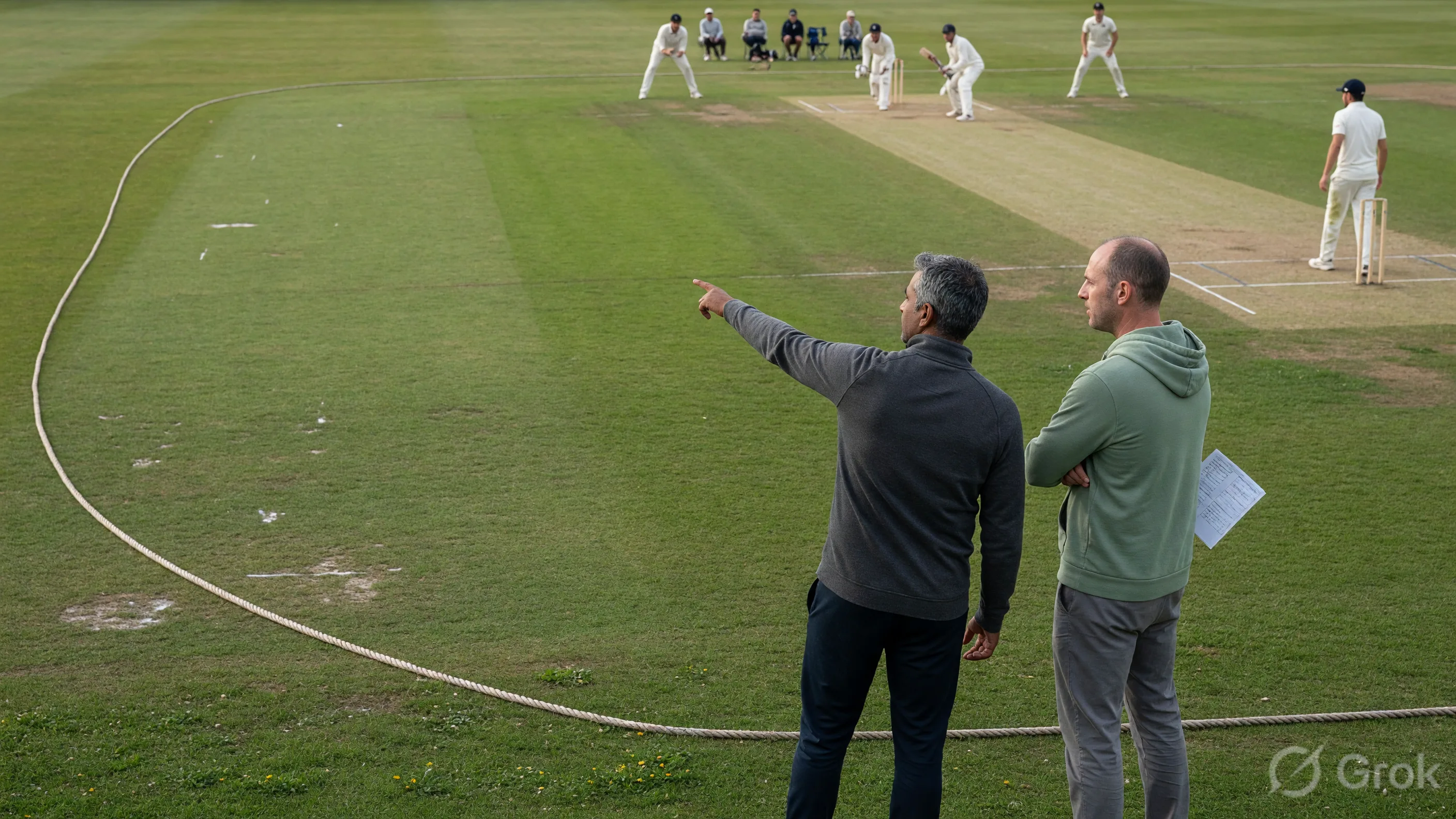
A short straight boundary raises the value of batsmen who hit straight. A long square boundary raises the value of batsmen who work the angles. A slow outfield reduces the value of boundary hitters and increases the value of batters who rotate strike. These details change fantasy output and they belong in the role map.
Step 4: treat injury language with three levels of confidence
Injury updates come in three states. Ruled out, which means the player is out of the pool and the probable XI is wrong by at least one name. Cleared, which means the player is available but the role is still a question, because workload, match fitness and selection risk may all apply. Under assessment, which means the fantasy decision is incomplete and should not be locked until an official update arrives. Blending those three states is the most common reason a captain pick fails before the toss.
The Pune preview mentioned that Punjab Kings were coming off a defeat to Gujarat Titans in which Odean Smith conceded two sixes from the final two deliveries. That detail supplied context for concern about the bowling group, but it did not prove that any individual bowler would fail in the next match. Match history explains why a team is being discussed. It does not turn one episode into a certain future outcome. A prediction that mistakes recent narrative for confirmed form is reading a story, not a fixture.
When an injury update is not official, the language should signal the gap. "Reportedly in contention" is not the same as "available". "Missed training" is not the same as "ruled out". "Working through a niggle" is not the same as "fit". A reader should be able to see where verified information ends and interpretation begins. The clearer that boundary is, the more useful the prediction becomes.
Step 5: read team form as context, not as captain material
Team form explains pressure, not opportunity. In the Pune preview, Mumbai Indians had lost each of their first four matches of the 2022 season while Punjab Kings had won two of their first four. Those facts created a context. They did not decide the captain pick. A captain is selected on role stability under the conditions of the upcoming match. A team record changes the match state, but it does not change who is most likely to face the most relevant deliveries.
The two probable XIs in the preview are useful because they let you compare role maps rather than famous names. Mumbai's list contained multiple batting options at the top, multiple all-rounders, and a bowling group with pace and spin variety. Punjab's list contained a packed top order, two all-round options in Livingstone and Smith, and a varied bowling group led by Rabada and supported by Rahul Chahar and Arshdeep Singh. The fantasy comparison is not which side has the better players. It is which side has roles that survive the conditions intact. A role that survives is more valuable than a name that does not.
Why role stability beats form for captain picks
Form is a lagging indicator. It describes what a player did in the matches that have already been played. Role stability is a forward indicator. It describes what the player is set up to do in the match that has not yet started. A prediction that leans entirely on form is solving a backward problem and hoping the answer also works forward. A prediction that tests role stability against the conditions of the upcoming match is solving the actual problem.
This is also why two predictions can name the same captain pick and reach different conclusions. The captain pick is the answer. The role map is the reasoning. When the reasoning is solid, the answer can be revisited when conditions change and still produce a sensible revision. When the reasoning is thin, the answer has to be defended on name alone, which usually means it does not get revisited even when conditions clearly require it.
Reading checklist for any fantasy cricket prediction
Three passes through any pre-match note
- Build the role map. Pair each named player in the probable XI with the role they are expected to perform. Note where the source is silent.
- Test the captain pick. Check whether the captain's role survives the conditions. Note the if-then sentence that would change the choice.
- Recheck at the toss. Confirm the XI, the batting order clues, the visible pitch and any bowling workload change. A prediction is complete only after its assumptions have been tested.
The routine does not promise a winning team. It produces a decision record that can be reviewed after the match, which is more useful than a single number. Prediction quality is learned from the reasoning that was visible at the time, not only from the final fantasy score.
How to use a prediction without over-relying on it
A published prediction should narrow the work, not remove the reader's own judgment. Use the probable XI to find the stable roles. Use the captain and vice-captain discussion to understand the strongest paths to involvement. Use the pitch and injury notes to find the conditions that could invalidate those paths. Then make the final selection only when the team news supports it.
For a current match-specific read, the live desk at fantasycricket365.com/predictions pairs each day's probable XI with a captain-pick note, a vice-captain note, and a short pitch and injury paragraph. Use that destination to compare today's confirmed team news with the framework above, not as a promise that any forecast will be correct.
Resist the temptation to carry one venue lesson into every fixture. A pitch that rewarded spin in one match can play differently after weather, preparation or usage changes. A player who was a strong captain candidate in a historical preview can become a poor option when batting position, fitness or team balance changes. The method travels better than the name.
What changes after the toss
Once the toss happens, three things can shift. The batting order may reverse, which changes the value of every role. The bowling rotation may move a specific bowler into the powerplay or out of the death. A bowler who was named in the probable XI may be held back because the captain prefers a matchup. None of these are surprises if the role map was built before the toss. They are all reasons to revisit the captain pick against the same role framework, not to abandon the framework for a fresh name.
The final review should be short. Is every selected player in the confirmed XI. Is the captain still expected to bat or bowl in the role used for the prediction. Has an injury update removed a key option. Does the pitch note still support the chosen balance. Has the toss changed the order of play or the value of a chasing specialist. If any answer is unclear, keep the uncertainty visible in the team selection.
The lasting lesson from a pre-match prediction
The best fantasy cricket prediction is not the one with the loudest certainty. It is the one that explains how a probable XI, a role, a condition and a piece of team news connect. The 2022 Mumbai Indians versus Punjab Kings preview shows the shape of that work, including the limits of any single preview. It is a dated fixture with a named venue, a recent team context, a suggested captain and vice-captain, and two probable lineups that can be read through role stability rather than reputation.
For any future fixture, keep the same discipline. Anchor the article to verified information. Mark historical material as historical. Separate availability from selection, and selection from captaincy. Treat pitch notes as conditional. Revisit every assumption after the toss. That process produces a more honest fantasy decision, even when the match refuses to follow the forecast.
Editorial scope: This is a durable explainer based on a dated 13 April 2022 pre-match preview. It does not claim a current fixture, current injury status, live pitch reading, offer, price, score or guaranteed fantasy result. Predictions are reading exercises, not guarantees.